PREPARE THE INK
The discharge base is mixed with the required pigment and activator shortly before production. Once activated, the ink has a limited working life.
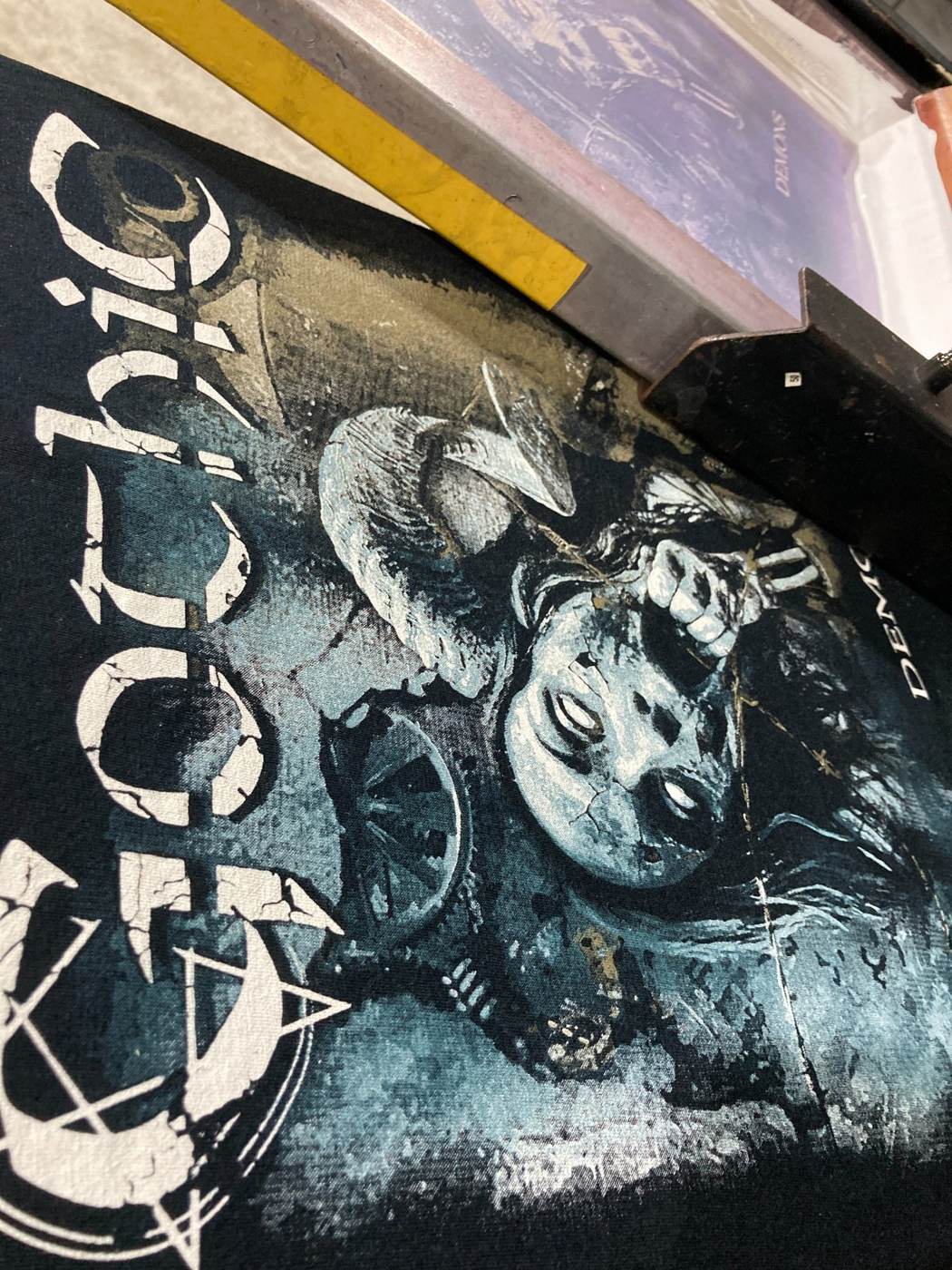
Inside the print process
Discharge printing does not simply place a thick layer of ink on top of a black T-shirt. It removes the garment's original dye and replaces it with a soft, breathable print that becomes part of the fabric.
Most dark T-shirts are dyed after the cotton fabric is made. Discharge ink uses a controlled chemical reaction to deactivate that dye only where the artwork is printed. The original cotton colour is revealed, or a new pigment is added at the same time. After curing and washing, the result has a much softer feel than a conventional opaque print.
The basic principle
A discharge base contains an activator that reacts with compatible garment dye when heat is applied. During curing, the dark dye breaks down in the printed area.
For a natural, vintage-looking result, the ink can be used without added colour. For a stronger coloured print, pigments are mixed into the discharge base before printing. The discharge reaction removes the shirt dye while the pigment remains inside the cotton fibres.
This allows us to print large artwork on black garments without creating a heavy, plastic-like layer across the chest or back.
From screen to finished shirt
The discharge base is mixed with the required pigment and activator shortly before production. Once activated, the ink has a limited working life.
Ink is pushed through the open areas of the screen and into the cotton fibres. Accurate registration allows multiple colours to sit cleanly next to each other.
The printed garment passes through a dryer. Heat activates the discharge reaction, removing the original dye and curing the new pigment.
The print often looks muted immediately after printing. Its final colour and soft texture become clearer after the first wash.
Why we use it
Metal artwork often covers a large part of the garment. A thick opaque layer can feel heavy, especially on a full back print. Discharge ink gives us strong detail and coverage while keeping the garment comfortable.
On compatible black cotton garments, discharge printing can remove the need for a solid white layer beneath every colour. This keeps the finished print lighter and helps preserve fine textures.
Because the process reacts with the garment dye, small variations can occur between shirt colours, dye lots and manufacturers. That natural character is part of what makes discharge prints distinctive.
Choosing the right method
Our preferred option for compatible cotton garments
Useful when discharge is not suitable
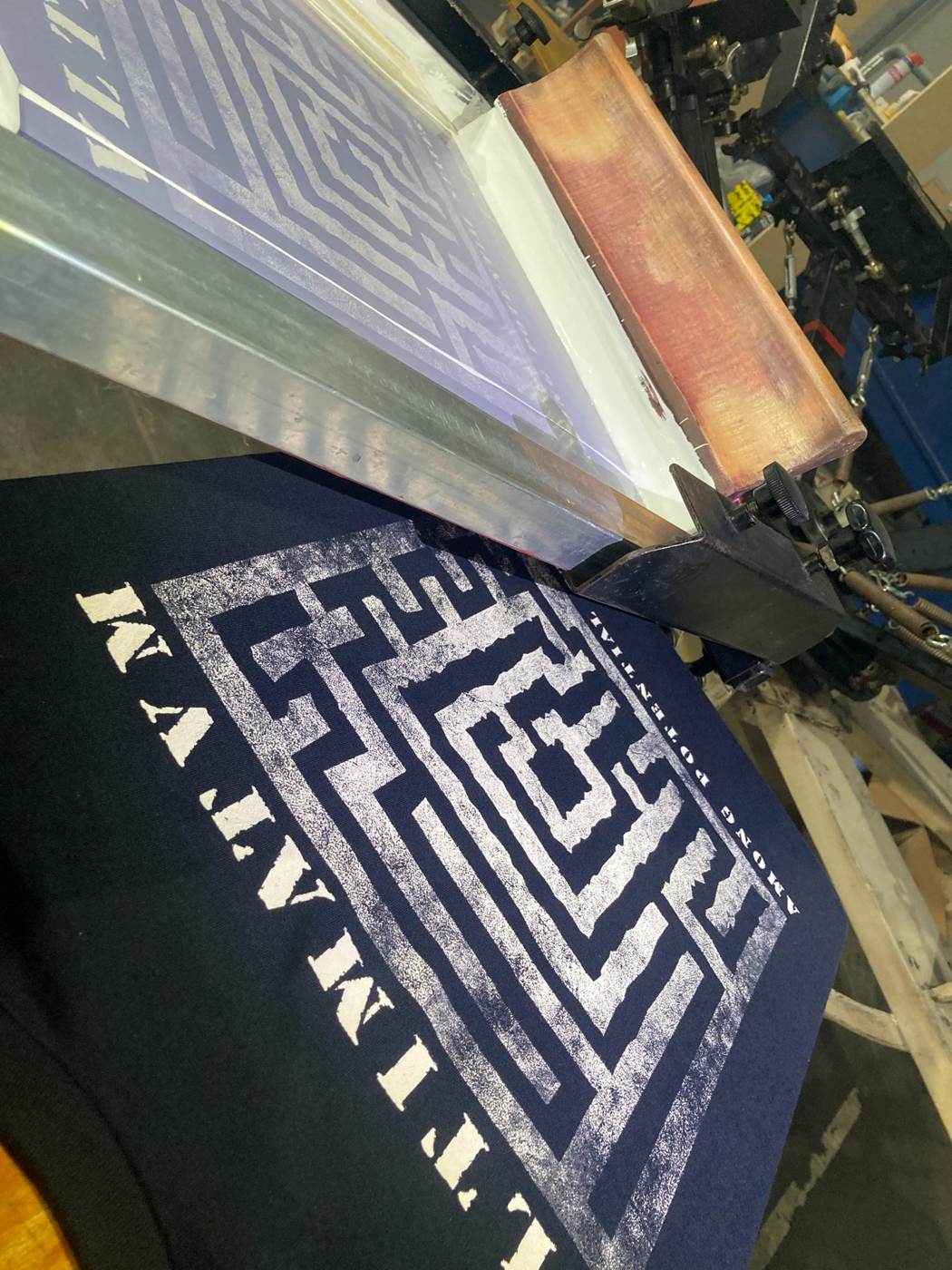
The finished result
Once cured and washed correctly, discharge ink leaves a print that moves with the fabric. It is well suited to merchandise that will be worn repeatedly, packed into vans, sold at festivals and washed again and again.
Common questions
No. The result depends on the fibre content and the dye used by the garment manufacturer. Ring-spun cotton garments with compatible reactive dyes usually give the best results. We select or test garments before production.
Fresh discharge ink can retain residue from the reaction and curing process. After washing, the print normally becomes softer and the final colour is easier to see.
Yes, pigments can be added to the discharge base. However, the final colour is also influenced by the garment dye, cotton and curing conditions, so the appearance is usually more organic than a plastic surface print.
It is primarily designed for cotton. Polyester and high-polyester blends do not discharge in the same way, so another water-based ink system may be more appropriate.
When printed and cured correctly, discharge prints are highly durable because the colour is integrated into the cotton fibres. The design ages naturally with the shirt.
Printing merch since 2005
Send us your artwork, quantities and deadline. We will recommend the right garments, ink system and colour setup for your project.